
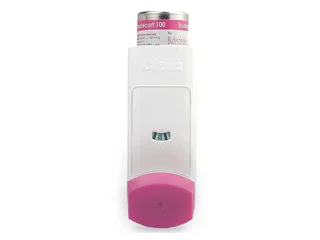
Budesonide Inhaler
Asthma, Chronic Obstructive Pulmonary Disease
100 · 200mcg
Developed to target bronchial inflammation to manage airway hyperactivity in respiratory conditions.
Budesonide is a corticosteroid used to control asthma symptoms and to treat Crohn’s disease of the bowel. This catalogue lists five budesonide medicines, including Entocort, Rhinocort and Budecort Inhaler, and two more.
Asthma, Chronic Obstructive Pulmonary Disease
100 · 200mcg
Developed to target bronchial inflammation to manage airway hyperactivity in respiratory conditions.
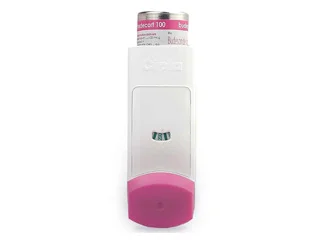
Asthma, Chronic Obstructive Pulmonary Disease
100mcg
Budesonide inhaler for asthma and COPD. It is inhaled directly into the lungs, delivering the anti-inflammatory effect right where it is needed.
This catalogue’s five budesonide medicines come from three companies: AstraZeneca, Cipla Ltd and Sun Pharmaceutical Industries Ltd. AstraZeneca originates Entocort and Rhinocort, which are listed here as single-ingredient budesonide medicines. Cipla Ltd makes Budecort Inhaler, which contains budesonide on its own, and Foracort Inhaler, which combines budesonide with the bronchodilator formoterol; both are listed for Asthma and chronic obstructive pulmonary disease, within Respiratory Health. Sun Pharmaceutical Industries Ltd originates Budez CR, a 3 mg capsule listed for Crohn’s Disease and ulcerative colitis.
No. Rhinocort is a separate single-ingredient budesonide medicine listed for allergic rhinitis and nasal polyps, not asthma. It shares the same active ingredient as Budecort Inhaler and Foracort Inhaler but is listed for a different condition.
Corticosteroids such as budesonide can suppress the immune system, raising the risk of viral, bacterial, fungal and other infections, including potentially fatal varicella (chickenpox) and measles. This is a labelled warning for people using budesonide-based medicines.
The capsule is a hard gelatin shell filled with granules coated to resist dissolving until they reach a less acidic part of the gut, above pH 5.5, so budesonide is released later in the digestive tract rather than in the stomach.
Last updated